The Most Common Trimming Mistakes That Make Pots Tippy
You flip the pot over. You start trimming. And you think you're holding it level. You're probably not. An off-center foot ring is the number one reason your pot rocks back and forth like a sad little boat. The worst part? You usually don't notice until it's leather-hard and you're way too deep into the piece to fix it without a total do-over. Here's the thing: your fingers lie. Your eyes, half-focused on a spinning wheel, definitely lie. Use a needle tool. Use calipers. Actually check if the clay you're removing is coming off evenly. Because a foot ring that's thick on one side and paper-thin on the other isn't just ugly. It's a stability disaster.
That "Minimalist" Foot Is Way Too Tiny
We all love a dainty foot. It looks refined. Elegant. But a contact point the size of a dime can't support a bowl built like a salad server. Physics doesn't care about your aesthetic. If the weight of the pot sits on a pinpoint, it's going to tip. Every. Single. Time. Wider is better. A foot ring needs a decent footprint to act as a counterbalance to the walls and rim. Think of it like a pyramid. Broad base, stable structure. Tiny base, broken ceramic on your floor.
When You Trim the Walls Into Oblivion
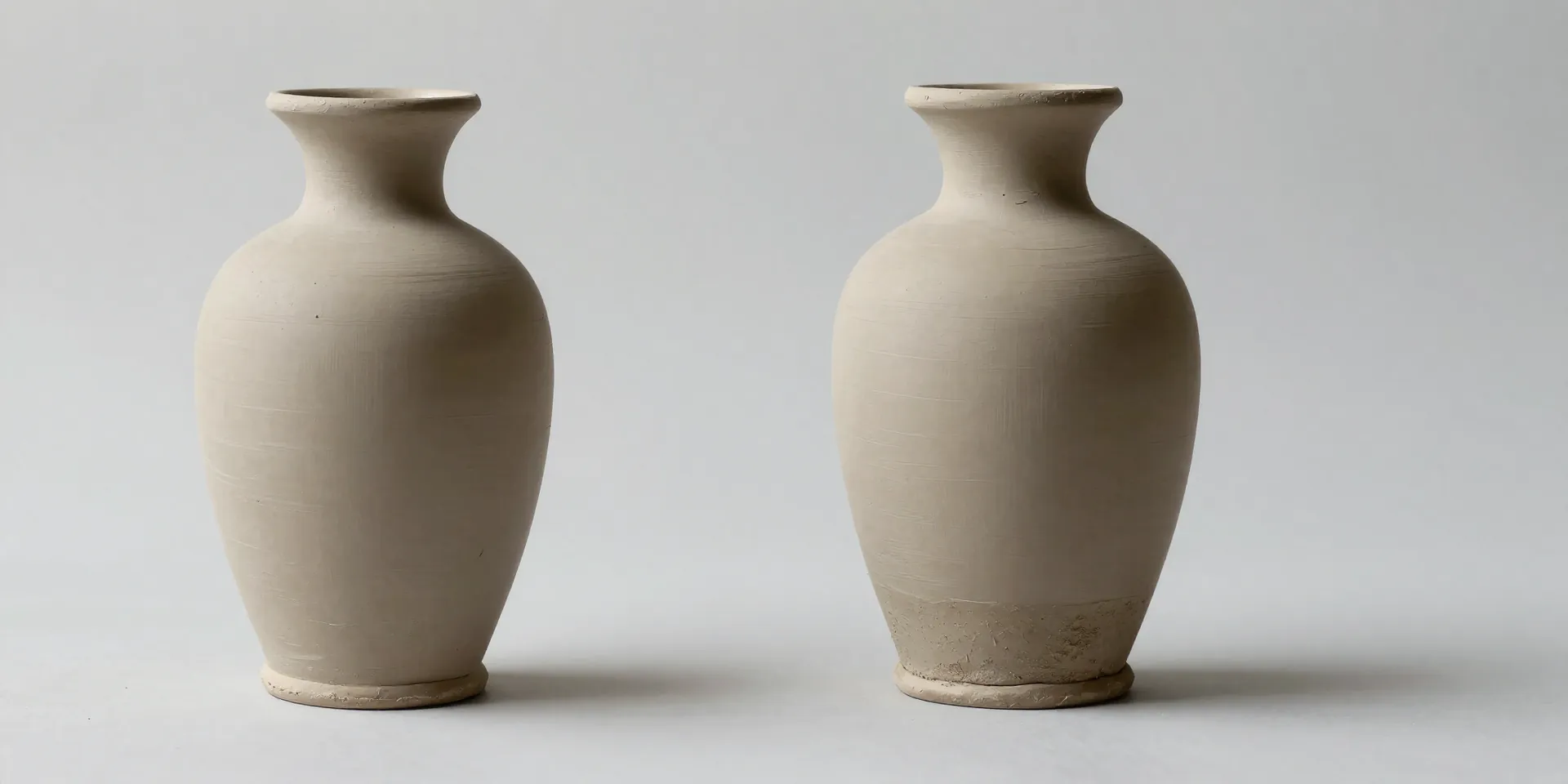
You get aggressive. The clay feels good under the trimming tool, so you keep going. Before you know it, the walls are eggshell-thin and the base is still a chunky slab. Congratulations, you've built a top-heavy accident waiting to happen. A pot needs its weight distributed in a way that makes sense. Heavy bottom, lighter walls. That's the secret sauce for pottery stability. When you invert that logic because you're chasing some "ethereal" thinness, gravity notices. And gravity always wins.
Asymmetry That Sneaks Up On You
Maybe the foot ring itself is centered. Maybe it's even a good width. But you trimmed one side at a sharp angle and the other at a soft curve. Or one half has a deeper groove than the other. Now the pot doesn't just rock—it pivots. It spins on the table when you touch it. Tippy pots aren't always obvious. Sometimes the flaw is subtle. A millimeter here, a slight curve there. But that uneven pressure point means the pot is constantly shifting, looking for balance it will never find. Slow down. Rotate the piece as you trim. Check the silhouette from every angle.
The Flat Bottom Trap
No foot ring at all? Just a flat bottom? Bold move. But flat bottoms only work if the surface they sit on is absolutely perfect. And guess what—your kitchen table isn't a CNC-machined slab. Neither is your kiln shelf. A flat bottom with even the slightest warp from drying or firing will turn your pot into a teetering nuisance. A foot ring gives you forgiveness. It creates a single, continuous plane of contact that bypasses tiny imperfections in both the pot and the surface below. Skip the foot, and you're trusting a whole lot of variables that clay simply doesn't handle well.